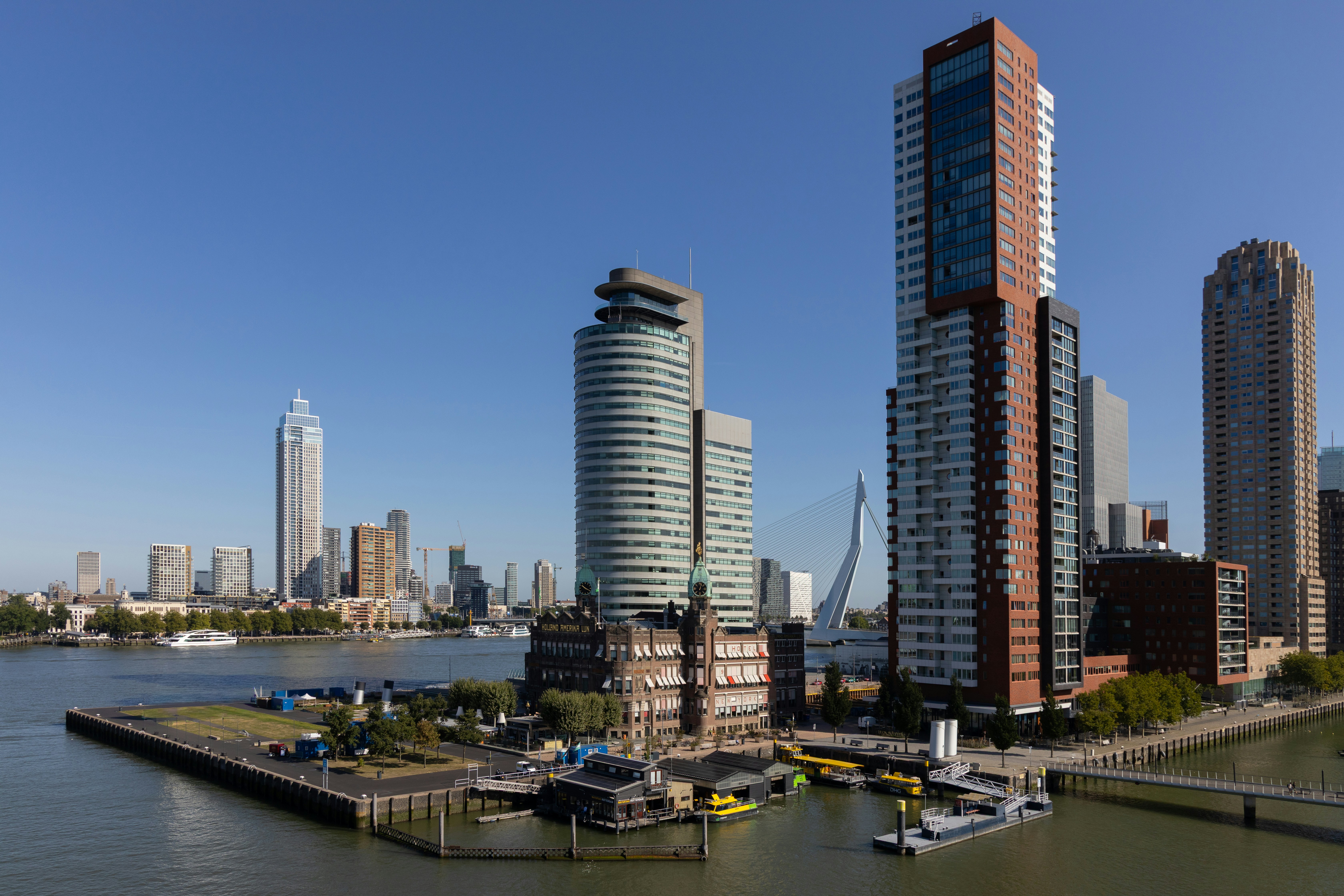
Rotterdam's investment case rests on a specific dynamic: a city in active transformation, where livability is improving in measurable ways across a meaningful number of postcodes, and where the gap between current Life Score and current market pricing is larger than in more stable markets like Amsterdam or Utrecht. CasaCanal's Investor cluster identifies the postcodes where that gap is most visible in the data.
What we score for investors
The Investor cluster reweights the Life Score to emphasize dimensions that tend to correlate with residential demand: transport connectivity index, amenity density per km², safety indicator trajectory, and environmental quality score. We don't forecast prices — CasaCanal is a livability intelligence platform, not a real estate prediction tool. What we provide is the underlying livability data that tends to precede and drive demand in residential markets.
Using the Investor cluster
Activating the Investor cluster for Rotterdam surfaces postcodes where current Life Score is strong relative to the market's current pricing of that postcode — areas where the analytical case for residential demand is present in the data even if it hasn't fully translated into market prices yet. Rotterdam's transformation story is ongoing, and the data captures where it's progressed, where it's progressing, and where the livability indicators are improving fastest. See also: Rotterdam vs Amsterdam — cost and livability compared.
Data sources and methodology
Investor cluster scoring uses CBS postcode statistics, RET transport coverage, municipal amenity registry data, police crime records, and environmental indicators — all normalized at Rotterdam postcode level. Life Score trajectory is calculated across available measurement periods. Full methodology at casacanal.nl/methodology.
The postcodes with the strongest investment indicators in Rotterdam are not always the most visible ones. Activate the Investor cluster in Rotterdam on CasaCanal to see which postcodes score best on the livability dimensions that drive residential demand.